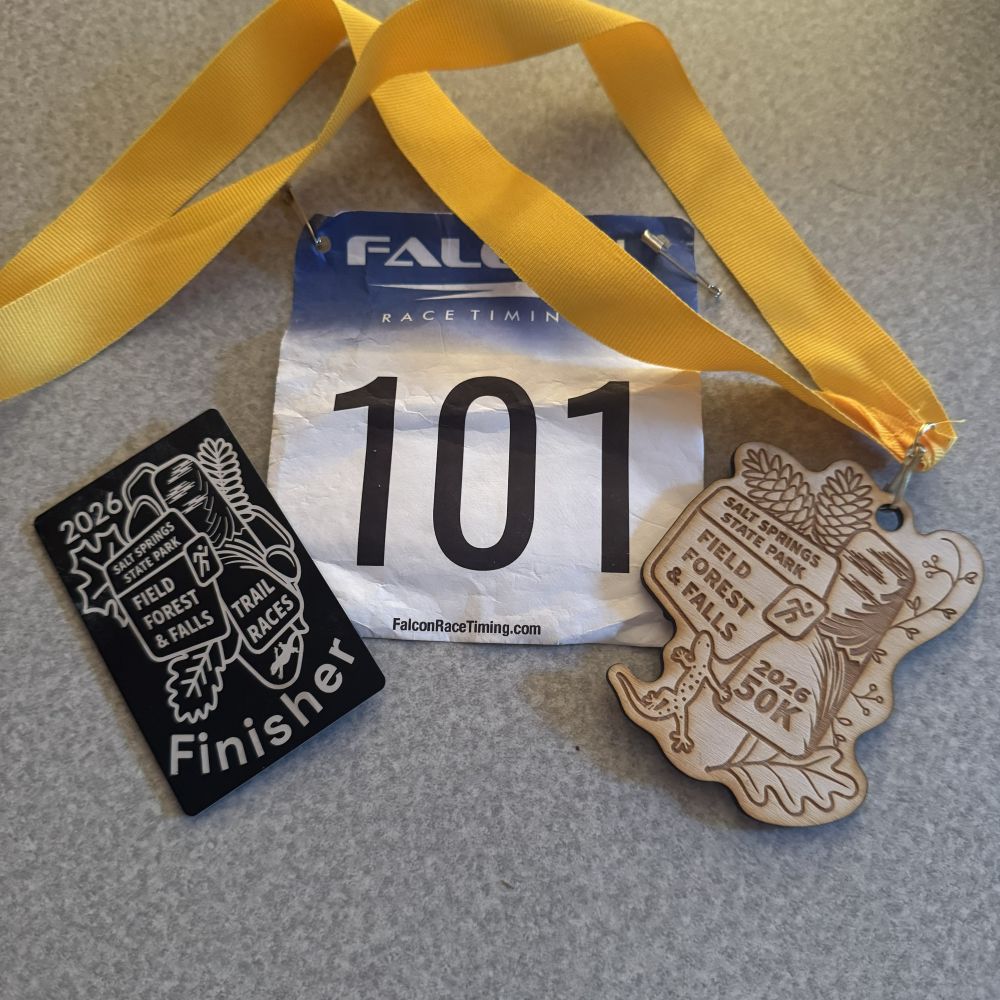
On August 29th I ran the 2026 edition of the Salt Springs Field, Forest & Falls Trail Races; specifically the 50K.
I’m currently training for the Bryce Canyon Ultras 100 miler on September 19th, 2026. It will be my first race not on the US East Coast, my first time at altitude, and my first mountain ultra. To say I’m dealing with a lot of unknowns would be an understatement. I wanted to run a shorter ultra as part of my training to test my legs on a course with a lot of vert. Originally I had my mind set on the Pikes Peak Ultra 50 miler; but life got in the way and I needed to find something closer to home. Thanks to Ultra Running magazine’s searchable calendar I was able to find a trail race three weeks before Bryce Canyon that featured over 7,000 feet of elevation gain (plus another 7,000 feet descent) in just 50K. That’s even steeper than what I’ll experience at Bryce Canyon.
Salt Springs State Park is a two and a half hour drive from where I live. Rather than wake up in the middle of the night to get to the 7am start line; I stayed over at a roadside motel about 20 minutes away. I woke up at 5am and made a quick stop at Dunkin' for a morning coffee and chocolate frosted donut. It was an uneventful drive to the start line and race check-in went off without a hitch.
At about 6:55am everyone gathered at the start line for the pre-race briefing. It would be 5 loops of the 10K course, with a single aid station at the beginning of each loop. The race director informed us that we signed up for what he believed to be the hardest 50K on the US East Coast, to which I involuntarily and audibly replied “I did what?”
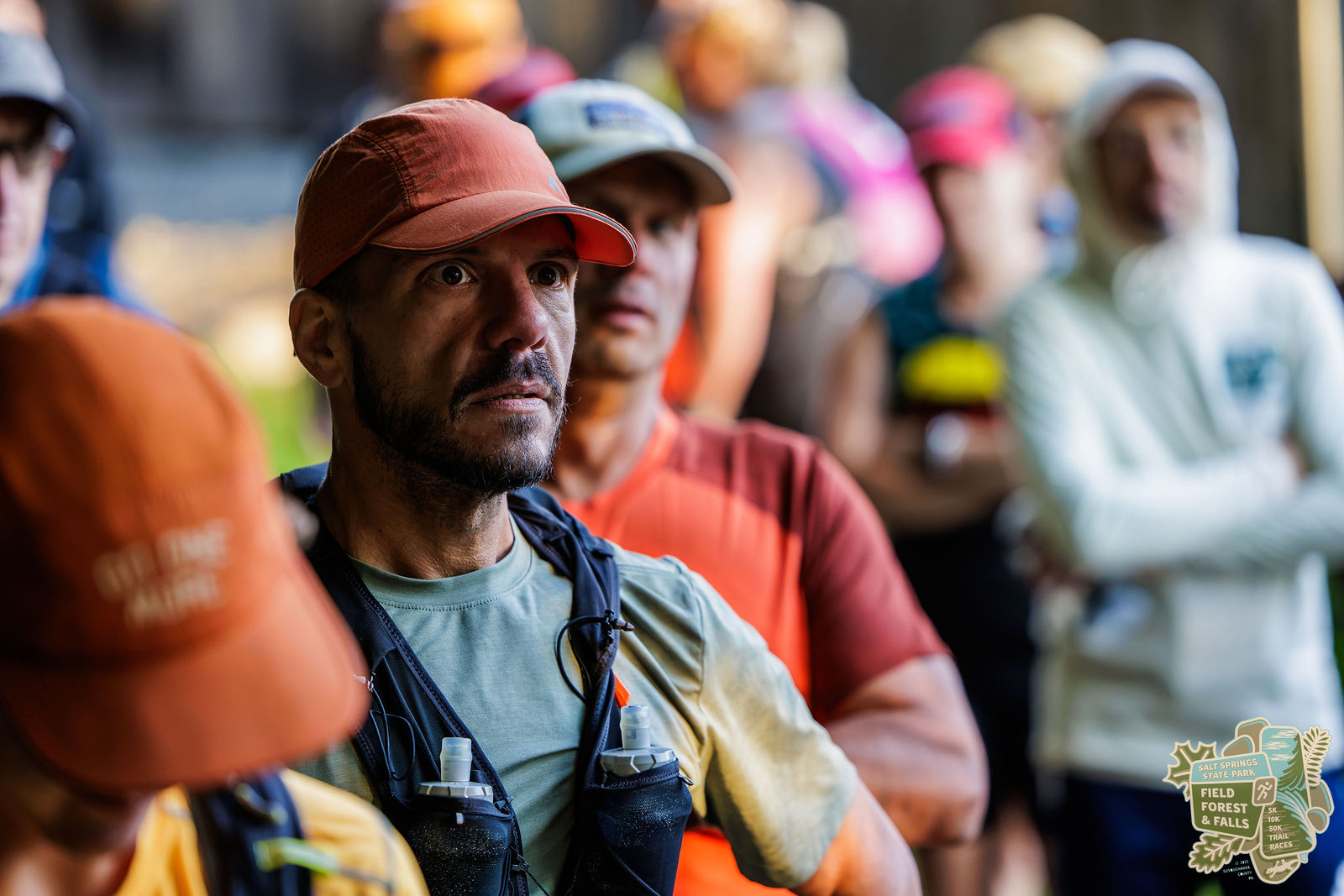
The clock struck 7am and we were off. The course began with a slight uphill and bridge crossing onto a clearly marked trail. We were running on grass still covered in dew and I think every runner had wet socks before we hit the first mile marker. This was the fastest section of the course and you had just enough time to get up to speed before you hit the first climb of the day. Each loop had three climbs totaling a little over 1,400 feet of elevation gain. Here’s the elevation profile of a single loop.
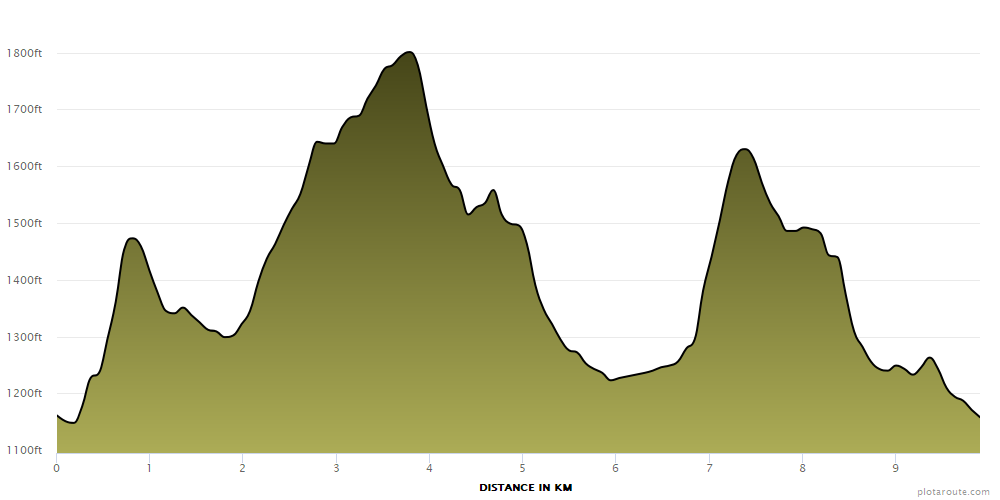
Since I’ve never ran or hiked anything with this much elevation gain, I didn’t know what to expect. The front of the pack quickly went out ahead of everyone else and I fell in with a few other mid-pack runners and we stayed together for most of the first loop. My strategy was to run by feel and practice ascending and descending. This was a training run for me, not a race.
Three miles into the race, I rolled my ankle for the first of two times that day. After a terrifying few seconds that felt like an eternity, I realized that the ankle felt okay and that I likely avoided any real damage. I felt it just enough to know I had rolled it and for the worry of it happening again to stay in the back of my mind for the duration of the race. I soon fell a second time on some loose dirt during a winding downhill, but nothing serious. I finished loop 1 with a group of runners around the 1:20:00 mark. Slower than I expected before the race but faster than I expected once I experienced the course.
I found the course mostly runnable outside the climbs, but only if you provided it with your utmost focus and attention. The moment you let your mind wander or played too fast and loose with your footing; it punished you. It was this unrelenting call for attention that made me agree with the race director, this was objectively the most difficult course I had ever run. Strangely, the steep climbs were a relief in some ways because they broke up the technical running sections. The downhills felt particularly treacherous the first time.
I still had plenty of gels and water in my vest (the popular Salomon Adv Skin 12) so I ran through the aid station without stopping and started on loop 2. I sooon realized my body was not working as hard as I expected. The technical terrain and cool weather meant that I wasn’t pushing like I would on a warmer, flatter course. This turned my nutrition plan on its head. Normally during a hard effort I would have 100g of carbs an hour using 50g Carbs Fuel gels. That felt completely unwarranted for the conditions. Because of the nature of the terrain; it was also hard to look down at my watch or take a gel without stopping, causing me to miss gels. So I ended up simply not using gels as often as I normally would. At first I was concerned this would cause an issue; but it actually worked out fairly well. I ended up only using 10 gels total, plus aid station food. I would estimate about 70g an hour for the duration of the race.
Other than another inconsequential fall, loop 2 was uneventful but eight and a half minutes slower than loop 1. The 10K race started behind us and the front 10K pack passed me and the folks I was running with. By the end of loop 2 I had some concerns. My socks were soaked, I had a hot spot on my right big toe, and my feet were sliding around in my shoes on the downhills more than I’d like. I took extra time at the aid station to put on fresh socks from my drop bag, apply bodyglide to the hot spot, and tighten my laces, including threading them through the final eyelet that I apparently failed to do when I unboxed them two weeks ago. I grabbed a shot of trail mix from the aid station, slammed a gel, and set out on loop 3 hoping for the best.
At some point during loop 3, I found myself navigating the increasingly familiar terrain without issue. My legs felt good, my ankle was quiet, and I was tackling the climbs without any real strain on my body or mind. Something had clicked. What was I so worried about? This actually felt great. This is a tough course and I’m not going to be setting any speed records; but it no longer felt like a goal, something I wasn’t sure I could do. It felt more like an activity; a nice day out in the woods. It was clear to me from this point on that I was going to finish the race without issue. That my training was in the process of paying off. That I could be joyful and let my fitness handle it. Then I stepped on a board in the mud and it flipped over and I crashed hard. A bruised hip and a cut on my arm later, I was back up and running with a smile on my face.
There’s not much more to tell after that. Loops 4 and 5 were slower than I wanted them to be, but didn’t feel challenging. I stopped at the aid station to enjoy bacon, perogies, and pancakes at the beginining of both. As I started loop 4 a blazingly fast woman passed me that turned out to be the overall leader looping me. I hope to one day be as fast as she was. I was also looped by the male leader late in loop 4 and for the first time ever in a race, I managed to loop someone myself. With only 28 participants, everyone was pretty spread out.
I took my phone out to take pictures during loop 5, only to find the battery was dead. There was no cell service in the area and it must have been constantly looking for cell towers the entire time. A good lesson learned.
At the end, I sprinted hard across the finish line with a time of 8:37. To my surprise, this was good enough for 11th overall, which is indicative of just how tough the race was. The overall winner finished in 6:02, which I find incredibly impressive now that I’ve run the course. Because it’s not close to home, I’m not sure I’ll ever run this race again, but there’s obviously a lot of room for me to improve if I do.
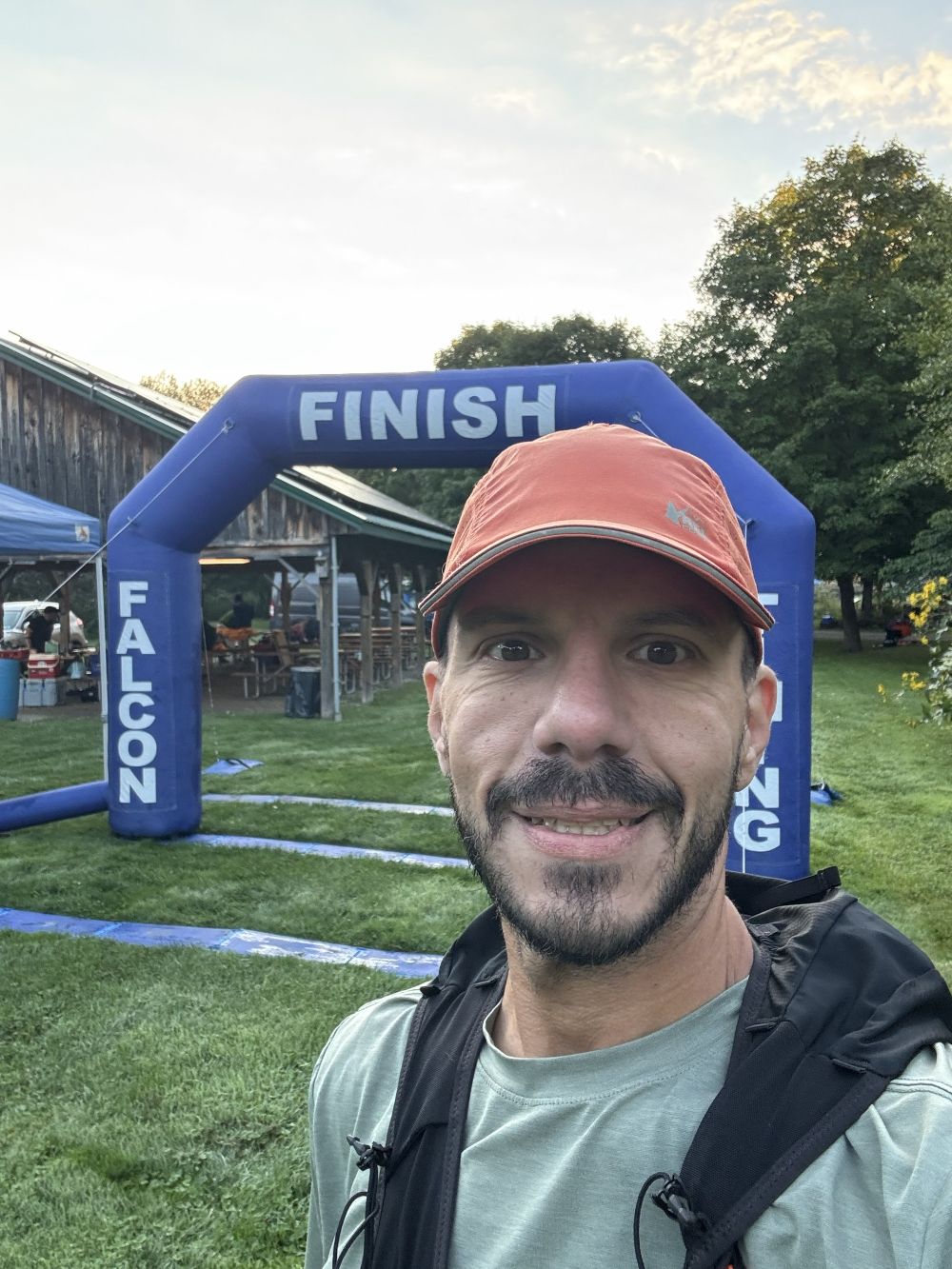
At some point during the race, I recall telling someone jokingly that I was “here to destroy my legs”. The 7,000 feet of climbing followed by another 7,000 feet of descent did just that. It wasn’t until day 4 of recovery that I could walk up and downstairs without putting too much thought into it, and even then my quads were still not a fan. It was exactly the stimulus I was looking for to prepare my legs, body, and mind for Bryce Canyon.
This race was a huge boost of confidence for me. Was it enough to prepare me to tackle the 14,000 plus feet of elevation gain as part of the Bryce Canyon Trail Races 100 miler? I’ll find out on September 19th.